Last updated November 21, 2026
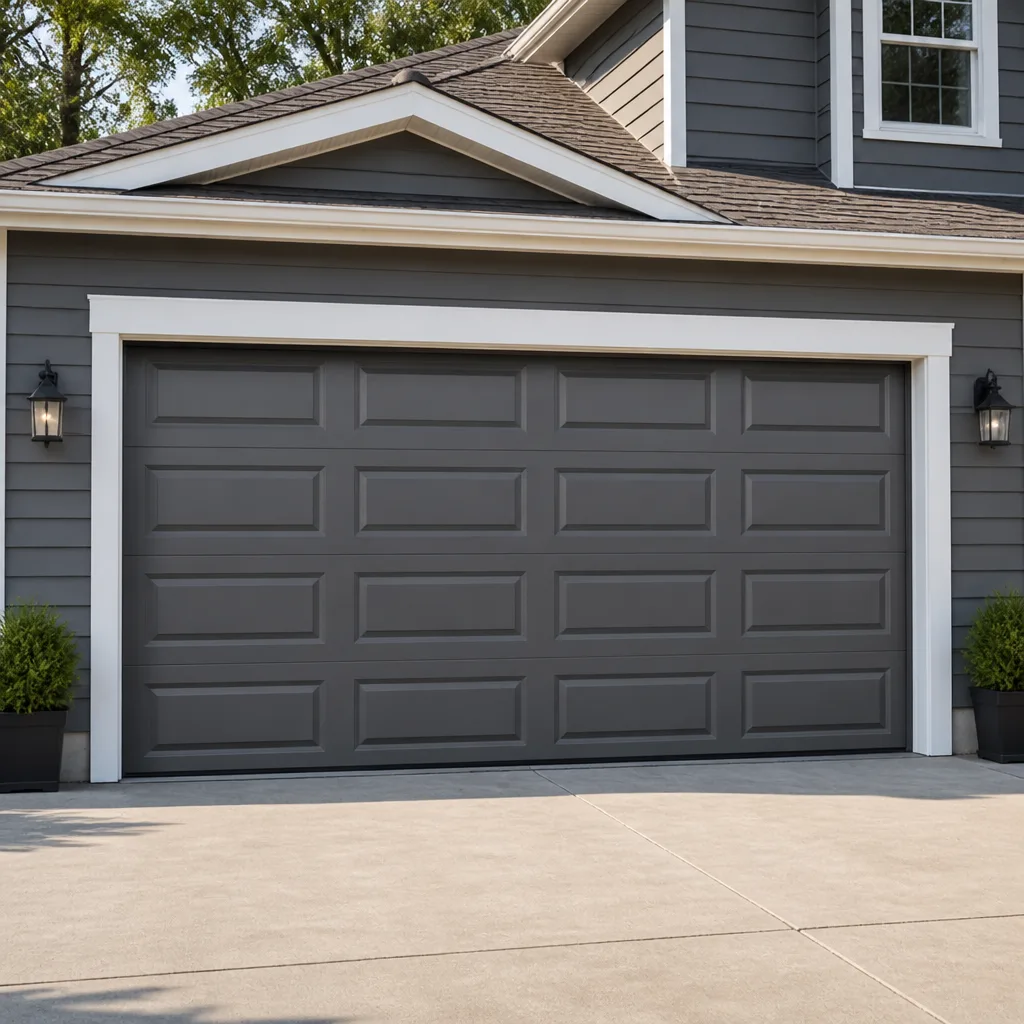 Raised-panel steel
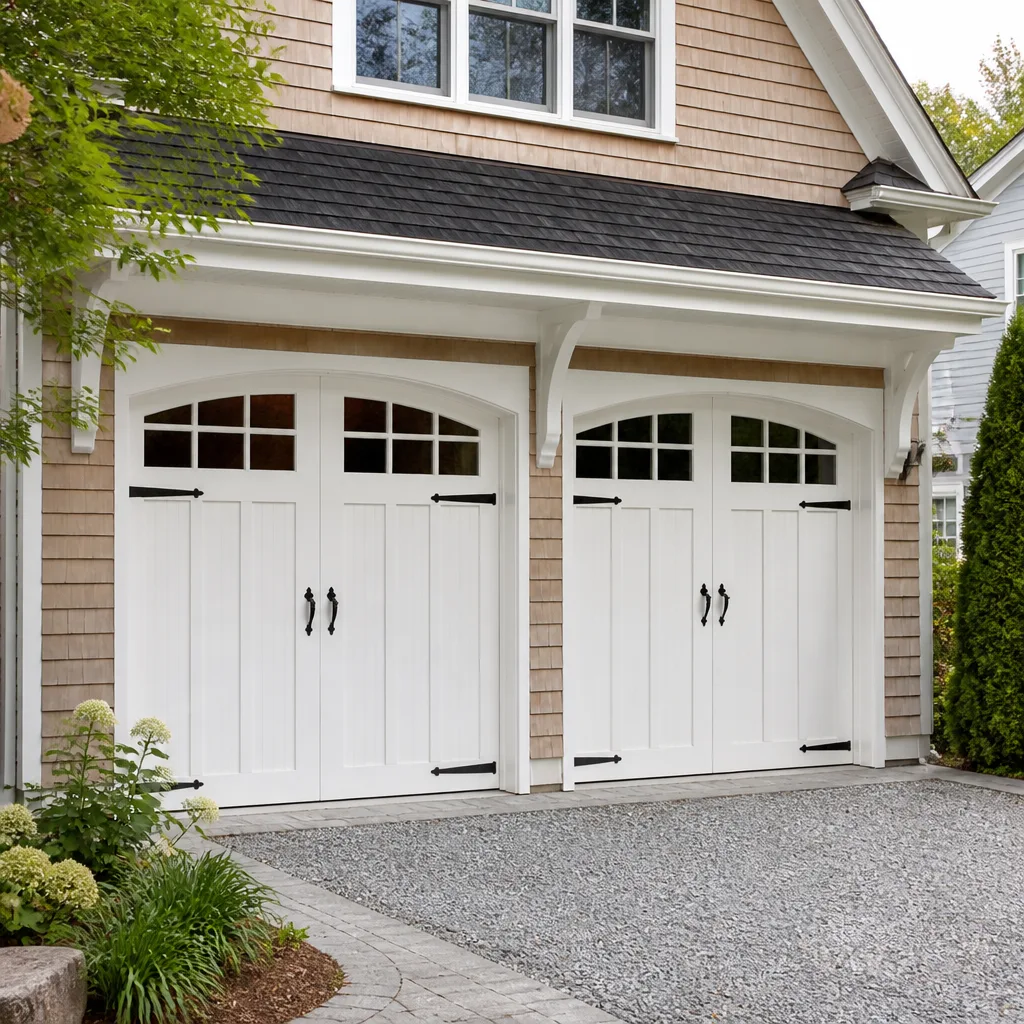 Carriage house
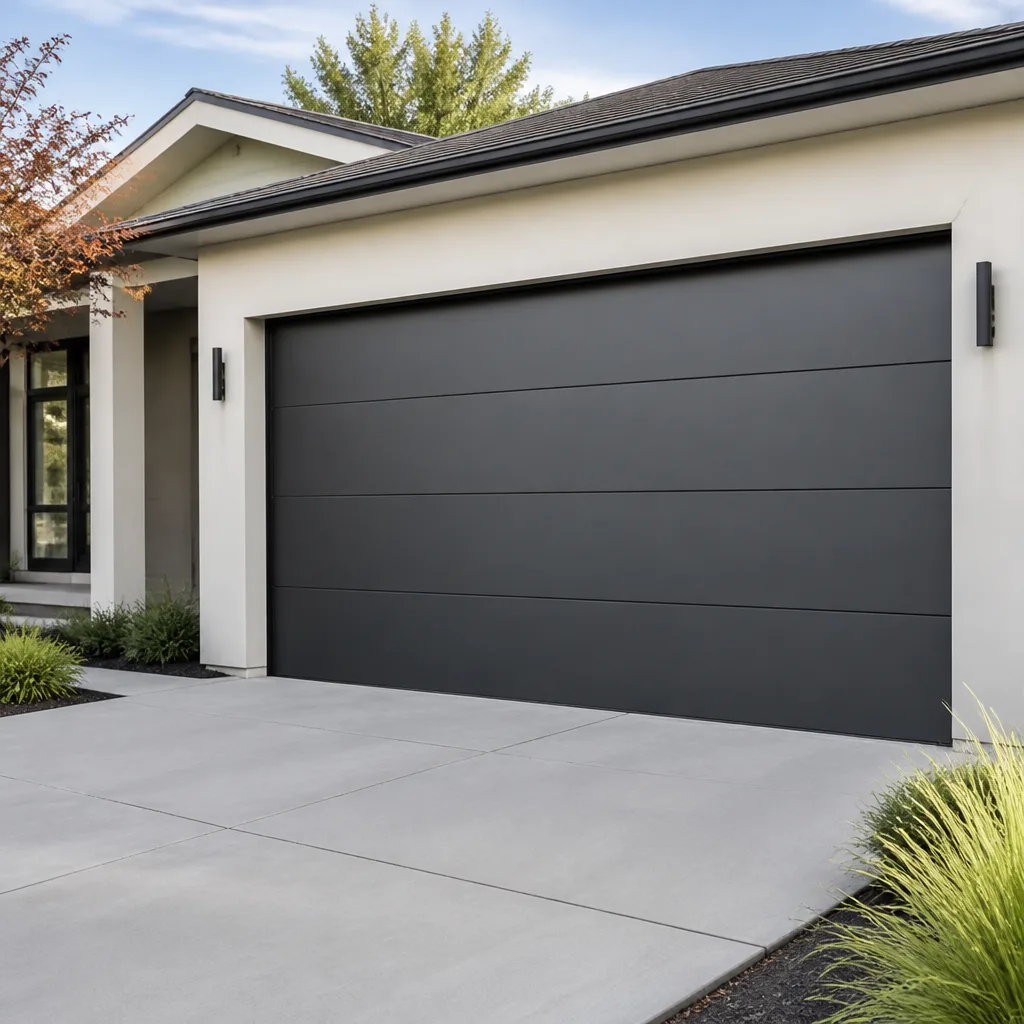 Modern flush
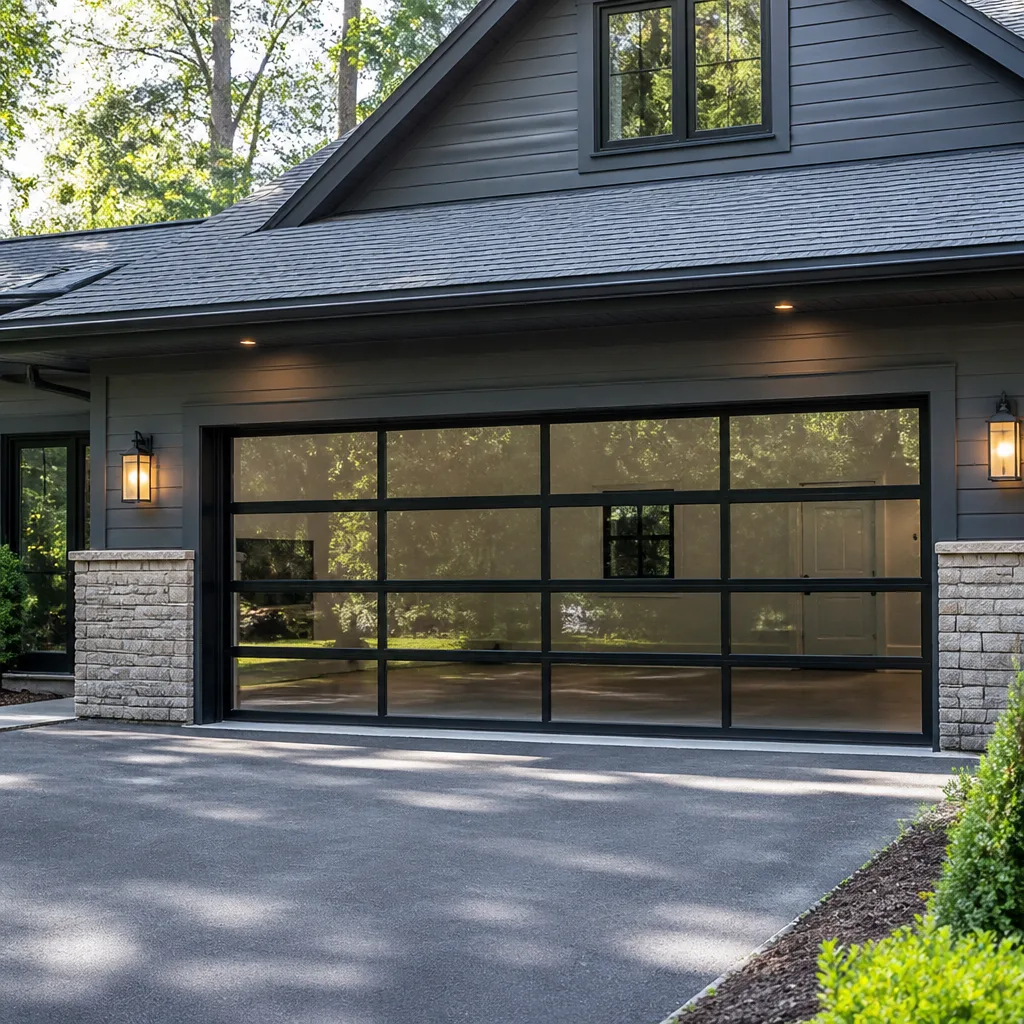 Full-view glass
 LiftMaster openers
 Chamberlain openers
Full 25-point door and opener safety check with every visit - springs, cables, rollers, tracks, and your LiftMaster or Chamberlain opener included
You get a price before we start. It does not change when the pro arrives.
Get your free estimateGarage Door Repair Maintenance Checklist for The Woodlands Homeowners
The maintenance interval printed in your garage door manual was written for average U.S. conditions. The Woodlands averages over 50 inches of rain a year and spends months above 90°F, so your door’s hardware ages on a faster and different schedule than the booklet assumes. That gap is why a door that’s “only a few years old” in The Woodlands can start squealing, sticking, or sagging while the manual still says everything is fine. Below is a checklist built for this climate and this town: which months to service what, which lubricants actually hold up in heavy humidity, how to inspect after a severe thunderstorm, and where the line sits between what you can safely do yourself and the three jobs that always need a technician. By the end you’ll know exactly how to keep the door opening smoothly through every season in The Woodlands.
Quick Answer
A garage door maintenance routine in The Woodlands should be monthly for a quick five-minute look and twice a year for full lubrication and balance checks, with an extra inspection after any severe thunderstorm or high-wind event. Lubricate springs, rollers, hinges, and the track with a silicone-based or garage-door-specific lubricant (not WD-40) about every six months, and tighten the hardware at the same time. Never adjust the high-tension springs, cables, or bottom brackets yourself; those three jobs require a trained technician every time.
Styles & brands we work with
- Raised-panel steel
- Carriage house
- Modern flush
- Full-view glass
- LiftMaster openers
- Chamberlain openers
Table of Contents
- Why The Woodlands Climate Sets a Different Maintenance Schedule
- The Month-by-Month Maintenance Calendar for The Woodlands
- Which Lubricant Actually Works in The Woodlands Humidity
- Post-Storm Inspection: What to Check After a Montgomery County Thunderstorm
- Catching Corrosion Early on Your Door Hardware
- What Homeowners Can Safely Do vs. What Needs a Technician
- The Five-Minute Monthly Walk-Around
- Reading the Warning Signs Before Something Fails
Why The Woodlands Climate Sets a Different Maintenance Schedule
Most garage door guides are written for a national audience and lean on a simple rule: lubricate twice a year, inspect once, done. That rule assumes moderate temperatures and moderate humidity. The Woodlands doesn’t run moderate. With the Gulf moisture sitting over Montgomery County much of the year and summer stretches that stay above 90°F, the steel springs, hinges, and rollers on your door cycle through more thermal expansion and contraction than the manual’s average expects. Add the region’s heavy spring and fall rain, and the metal parts are wetter, more often, than they’d be in a drier climate.
The practical result is that maintenance intervals compress here. A door that could go nine months between lubrications in a dry climate may want attention every four to six months in The Woodlands to stay quiet and smooth. Humidity also changes how lubricants behave: some products that work fine in Arizona get thin, run off, or attract a sticky film of dust in humid air. And the routine thunderstorms that roll through the area bring wind-driven debris that finds its way into tracks and around hinges, which is why a post-storm inspection earns its own spot on a The Woodlands checklist rather than being folded into a generic annual look.
None of this means your door is fragile. It means the schedule that keeps it reliable here is a little tighter and a little more weather-aware than the one stapled to the manual. Treat the checklist in this guide as the local version of that generic interval.
The Month-by-Month Maintenance Calendar for The Woodlands
Think of the year in four quarters rather than “spring and fall,” because that’s how the weather actually breaks in The Woodlands. Here’s how we sequence garage door maintenance across the year. Times are approximate; adjust to how heavily your door is used.
- January through March – the full service pass. This is the coolest, driest stretch, which makes it the best time for a thorough lubrication and hardware check. Clean and lubricate rollers, hinges, springs, and the bearing plates, and tighten every bolt you can reach without putting a wrench on the torsion system. Check the balance by disconnecting the opener and lifting the door halfway; a well-balanced door holds there.
- April through June – the pre-storm prep. Before the heaviest rain season, clean the tracks out with a damp cloth (no solvent), clear debris from the photo-eye lenses, and test the safety reverse. Inspect the bottom weather seal for cracks or gaps, since a failing seal is what lets rain and insects in during the wet months. Look at the paint or finish on the door panels for blistering.
- July through September – the heat-and-humidity check. This is when doors in The Woodlands work hardest. Re-lubricate anything that’s started to squeak, and pay attention to the opener. Heat stresses the opener motor and the gear assembly, and humidity thickens old grease. Listen for new noises and watch for slower travel.
- October through December – the post-summer tune-up. After a summer of heavy cycling, do another balance check, tighten hardware, and inspect for any corrosion that’s started on hinges or the bottom bracket. Clear leaf drop and storm debris from around the door and inside the track channel.
Layered on top: a five-minute visual walk-around every month (covered further down) and an immediate inspection after any severe thunderstorm or high-wind event. Two full service passes plus quick monthly checks is the rhythm that keeps a door running smoothly through a full year in The Woodlands.
Which Lubricant Actually Works in The Woodlands Humidity
Not all lubricants are interchangeable, and the spray can in most garages is the wrong one for this climate. Here’s how the common options actually behave when the air is wet and warm.
- Silicone-based lubricant: the best default for The Woodlands. It goes on clean, doesn’t gum up in humidity, holds its film well, and doesn’t collect as much dust. Use it on rollers, hinges, and the torsion spring coils.
- White lithium grease: good for areas that see heavy metal-on-metal rubbing, like the opener’s drive mechanism, but it can get tacky in long humid stretches. Use it where a thicker film helps and wipe off excess.
- Garage-door-specific spray: many manufacturers sell a lubricant formulated for rollers and tracks. These generally hold up well; check that yours is rated for humid climates.
- WD-40 (the standard multi-use product): it’s a water displacer, not a long-term lubricant. In The Woodlands humidity it acts more like a solvent, thins out quickly, and leaves the metal under-protected within days. It’s fine for loosening a rusted bolt temporarily, but not for routine spring and roller lubrication.
- Motor oil or household grease: too heavy and too sticky. In this climate it attracts dust and grit that turns into an abrasive paste on the rollers. Skip it.
Whatever you use, apply it sparingly and wipe off the excess. A light, even film protects the metal; a heavy coating works against you by trapping dirt. The goal is a quiet door that stays quiet through a humid summer.
Post-Storm Inspection: What to Check After a Montgomery County Thunderstorm
Severe thunderstorms and high-wind events are a regular feature of the weather calendar in The Woodlands, and they’re the single biggest cause of new garage door problems we hear about. Wind loads the door unevenly, debris ends up in places it shouldn’t, and the track can shift slightly without obvious damage. A focused post-storm inspection catches small issues before they become failures. Work through it in this order:
- Look at the door panels from the street. Any new bend, crease, or dent along the panel edges or the bottom section signals that wind or flying debris struck the door. Don’t force a bent door to cycle; a panel that binds can pull the whole system out of alignment.
- Check the tracks for debris. Small branches, leaves, and grit collect inside the track channel. Wipe the inside of the track with a cloth and make sure nothing is pinching the path the rollers travel.
- Test the safety reverse. With the door open, place a small object (like a roll of tape) in the door’s path and close the door. The door should reverse when it meets resistance. If it doesn’t, stop using the door and call a technician.
- Check the photo-eye lenses. The two small eyes near the door opening should be clean and aligned. Storm debris and driving rain can knock one out of alignment, which disables the automatic operation.
- Run the door through a full open and close. Watch and listen. Jerky travel, a grinding sound, or a door that stops short points to a problem you’ll want to diagnose right away.
If the storm was severe enough that neighbors lost trees or roof shingles, treat your garage door with the same “check it before you trust it” mindset. It’s cheap to look and expensive to ignore.
Catching Corrosion Early on Your Door Hardware
The moisture that makes The Woodlands green is also what quietly attacks the steel and fasteners on your door. Corrosion usually starts where water sits or where protective coatings wear thin. Catch it early and you’ll get years more out of the hardware. Here’s where to look:
- The bottom bracket and bottom seal area: water pools and runs down the door’s lowest edge more than any other place. Look for rust streaks or bubbling paint on the bottom bracket and the lowest panel.
- Hinges and roller shafts: these are where moving metal wears through its coating. A light sheen of oil on the hinge knuckles is good; a rough orange-brown patch is the start of corrosion.
- Springs: torsion springs sit above the door and collect humid air and condensation. Rust is a warning sign, but any sign of corrosion on the spring is a reason to call a technician, not just to clean it.
- The track and its bolts: steel track fasteners are a common corrosion point. If you see rust blooming around a bolt, that’s where to focus your cleaning and lubricating.
- The door skin at the panel seams: seams trap water. Check for paint lifting or a chalky film along the folds.
When you do find early corrosion, clean the spot with a fine abrasive (light-strike rust can come off with steel wool), dry it thoroughly, and touch up the finish so moisture has no bare metal to attack. If corrosion is inside the spring or has compromised a load-bearing part, that’s a technician’s call.
What Homeowners Can Safely Do vs. What Needs a Technician
The line here is firm: some jobs are easy to do safely on your own, and a few are genuinely dangerous. Knowing which is which is the most important item on this checklist. Here is where the dividing line sits.
Homeowner-safe tasks
- Lubricating rollers, hinges, and the track bearing plates with a silicone-based lubricant
- Cleaning the track with a damp cloth and picking out debris
- Wiping the photo-eye lenses and checking alignment
- Testing the safety reverse and the door balance
- Tightening visible bolts and screws on the hinges and the track brackets
- Cleaning and painting the door panels and checking the bottom seal
Always call a technician
- High-tension torsion springs. These store an enormous amount of energy, and if one lets go during an adjustment or a dangerous removal, it can cause serious injury. Springs are the number-one reason we strongly recommend against DIY work. When a spring breaks, call us rather than pull on it.
- Cables and bottom brackets. The cables carry the door’s weight in a tensioned loop. The bottom bracket where the cable attaches is under constant tension. Adjusting or removing either one is high-risk work. This is a hard line.
- Track realignment and panel replacement. A door that’s come out of its track, or a damaged panel that needs replacing, is a structural job. Forcing a misaligned door to cycle can pull the whole system apart. This is also where a full garage door repair visit is worth the call: a technician can align the track and check the whole system at once.
If you’re ever unsure which side of the line a job falls on, that means it’s a technician’s call. When you do need help, our team handles it end to end, and our technicians have up to 8 years of experience on the equipment.
The Five-Minute Monthly Walk-Around
Full service passes are twice a year, but a five-minute look every month catches problems while they’re still cheap. Do it once a month, ideally around the same date so it becomes habit. Here’s the sequence:
- Test the safety reverse by closing the door on a small object. It should reverse. If it doesn’t, don’t use the automatic opener until it’s fixed.
- Listen to the door as it runs through a full cycle. Any new squeak, rattle, or grind is a signal to lubricate or investigate.
- Watch for uneven travel. A door that drifts to one side, moves in fits and starts, or takes longer to close than it used to is telling you something.
- Inspect the bottom seal for cracks, gaps, or sections that have pulled loose.
- Do a quick track and debris check, particularly after rain or a windy stretch.
If you run this every month in The Woodlands, you’ll know your door’s baseline. Then any change is obvious, and you can act on it early, whether that’s a re-lube, a hardware tightening, or a call for a professional diagnosis.
Reading the Warning Signs Before Something Fails
Most garage door failures announce themselves in advance. The trick is knowing which sounds and symptoms mean “maintenance” and which mean “call now.” Here’s how to sort the common ones.
- A single loud bang from the door: that’s usually a torsion spring letting go. Stop using the door, don’t try to remove it, and call for professional spring repair. For a closer look at the job, see our guide to garage door spring repair.
- The opener runs but the door doesn’t move: often a broken spring, a snapped cable, or a disconnected trolley. Diagnose it before you keep cycling the motor.
- The door goes up a few inches and stops: usually safety-reverse problems from the photo-eyes or the opener’s travel limits. This is a common garage door opener repair visit.
- The door is noticeably heavier to lift by hand: a sign the door is out of balance, commonly a spring that’s lost tension.
- Grinding or squealing on every cycle: usually worn rollers, dry hinges, or a track that needs cleaning and lubrication.
- The opener’s light flashes a trouble code: on brands like LiftMaster or Chamberlain, a repeated flash pattern points to a specific fault. A technician can match the code to the fix.
A door that’s making noise or moving oddly isn’t going to fix itself. If you’ve re-lubricated and tightened, and the symptom comes back, that’s the point to call.
Common Mistakes to Avoid
- Lubricating the track surface itself. It’s a common instinct, but grease on the track picks up dust and grit and turns into a sticky paste that drags on the rollers. Lubricate the rollers and the bearing plates, not the open face of the track. In The Woodlands humidity this mistake shows up fast.
- Using WD-40 as a maintenance spray. It’s a great water displacer and a poor long-term lubricant. In this climate, the coating thins out within days, and the metal is right back where it started. Use a silicone-based or door-specific lubricant instead.
- Adjusting the springs to “fix” a slow door. This is the single most dangerous mistake on this list. Torsion springs are under load, and adjusting them is a job for a trained technician.
- Ignoring the bottom seal. A cracked seal lets rain, insects, and humidity inside the garage. In The Woodlands, that’s the difference between a dry garage and a damp one; replace the seal when it starts to fail.
- Skipping a post-storm look. The thunderstorms here are frequent, and a small misalignment after a high-wind event turns into a bigger repair if it’s ignored for weeks.
- Tightening everything with a power tool. Over-torquing bolts can strip threads on hinges and brackets. Snug is enough, and hand-tighten where you can.
- Putting off the opener service. The opener is the part most The Woodlands homeowners forget. A worn gear or a failing capacitor shows up as a door that works intermittently. Catch it early and it’s a cheaper fix.
Most of these come from applying a national garage door checklist to a local climate. The fix is the same: adjust the schedule, use the right products, and know where the technician’s job begins.
See the difference
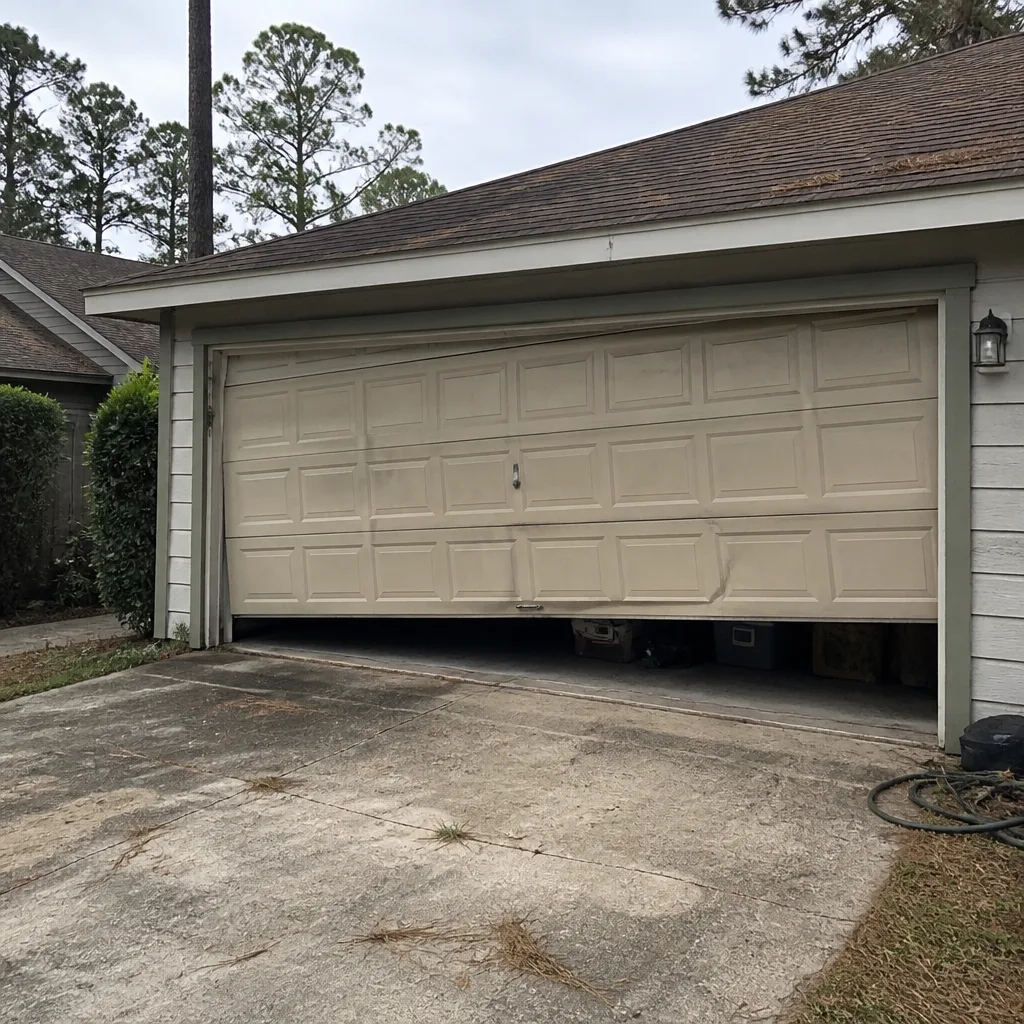 Before
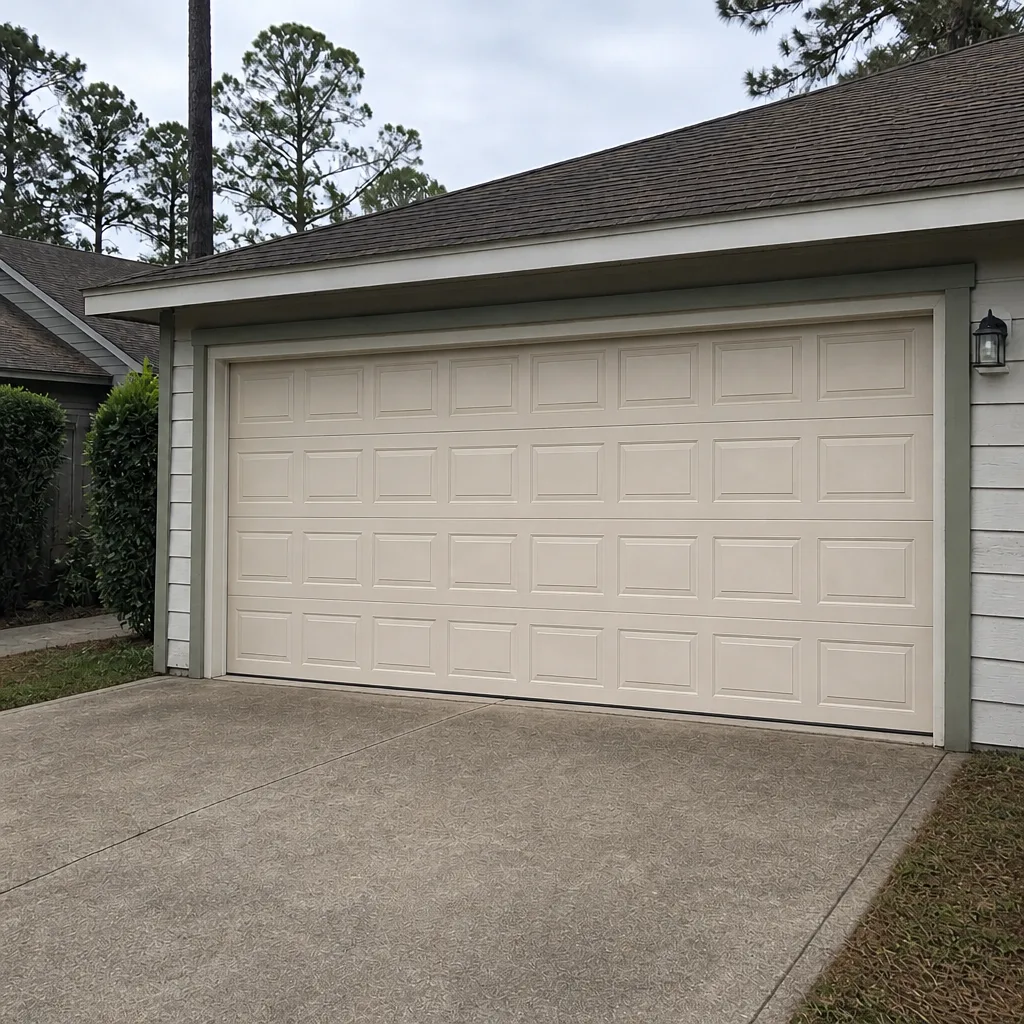 After
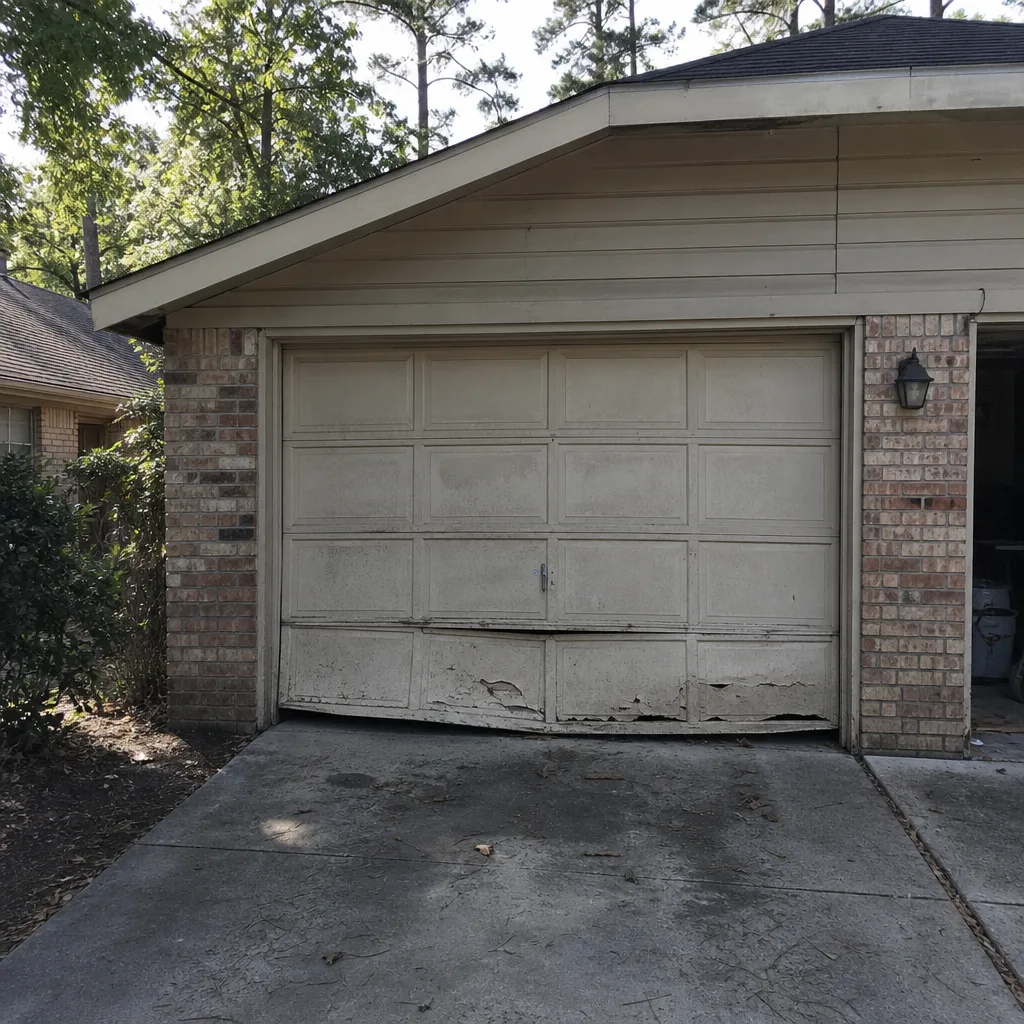 Before
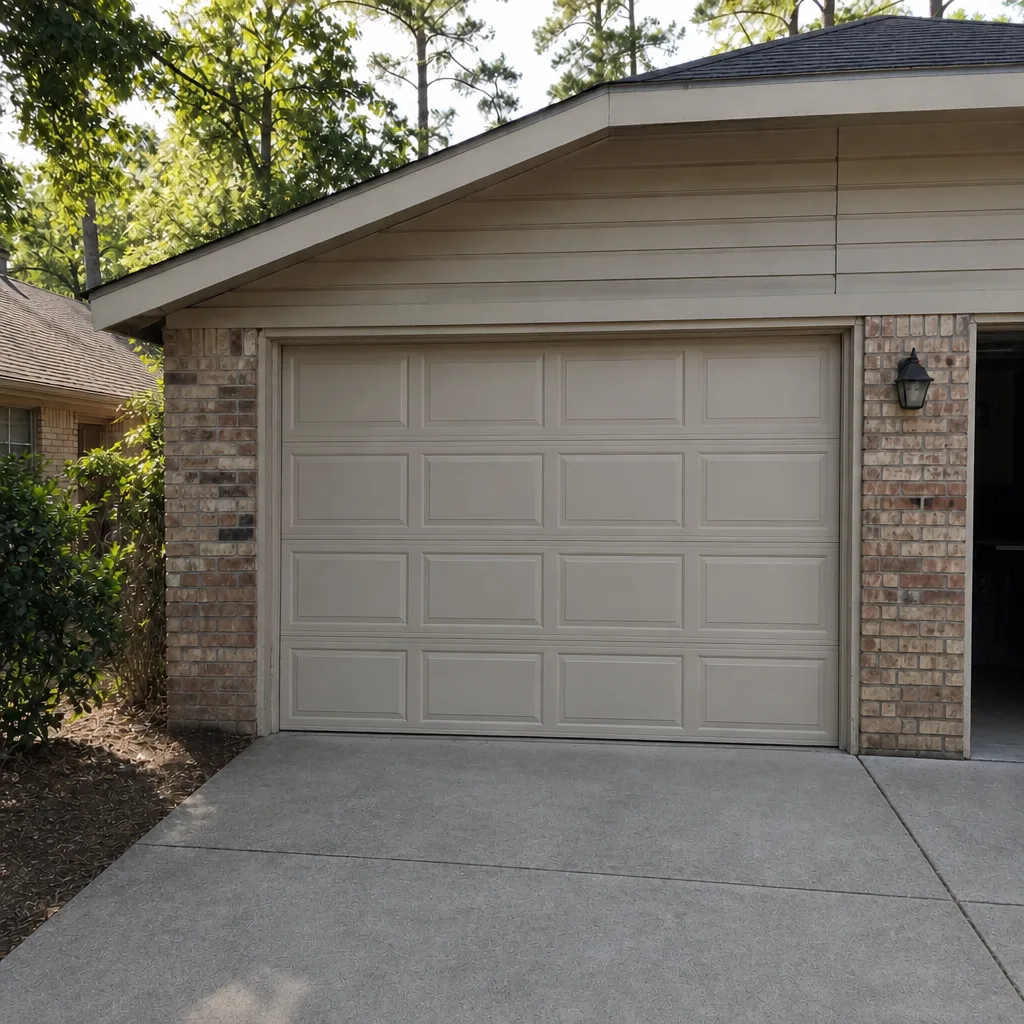 After
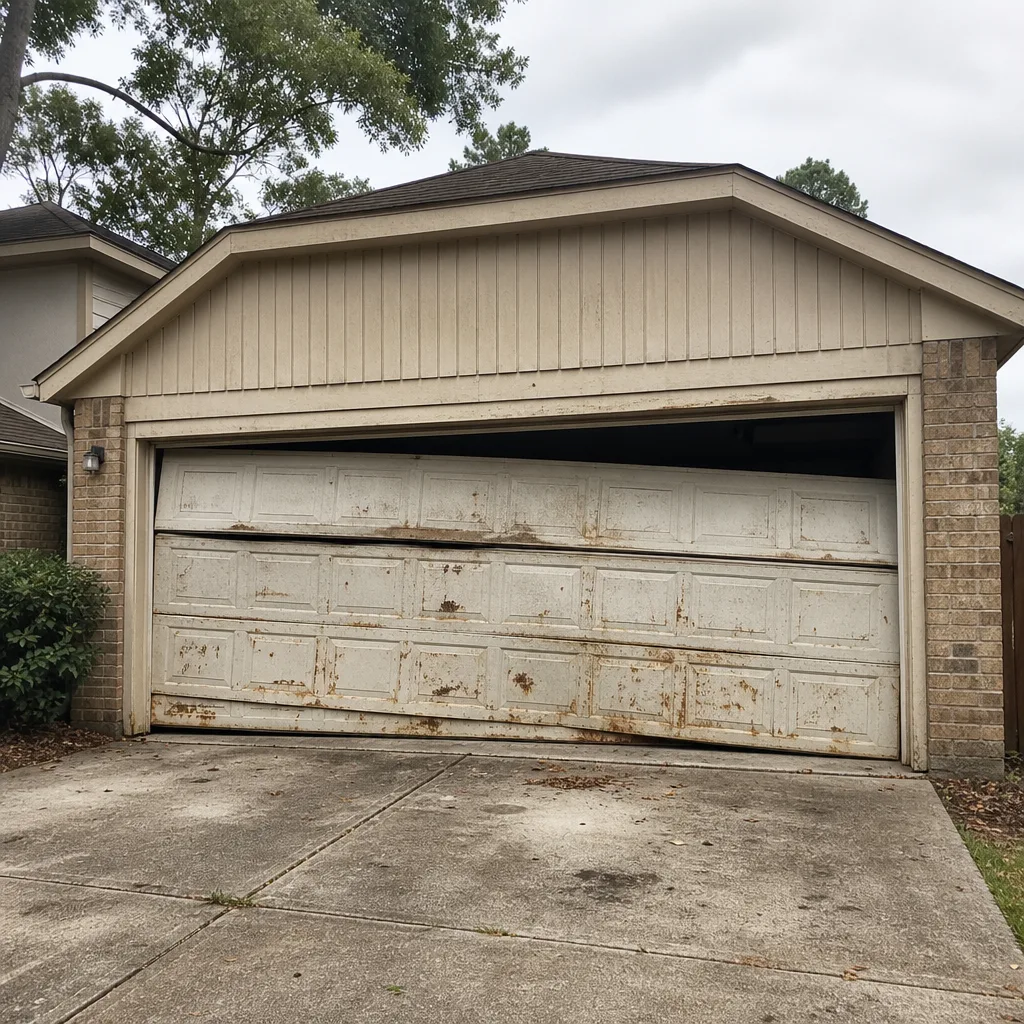 Before
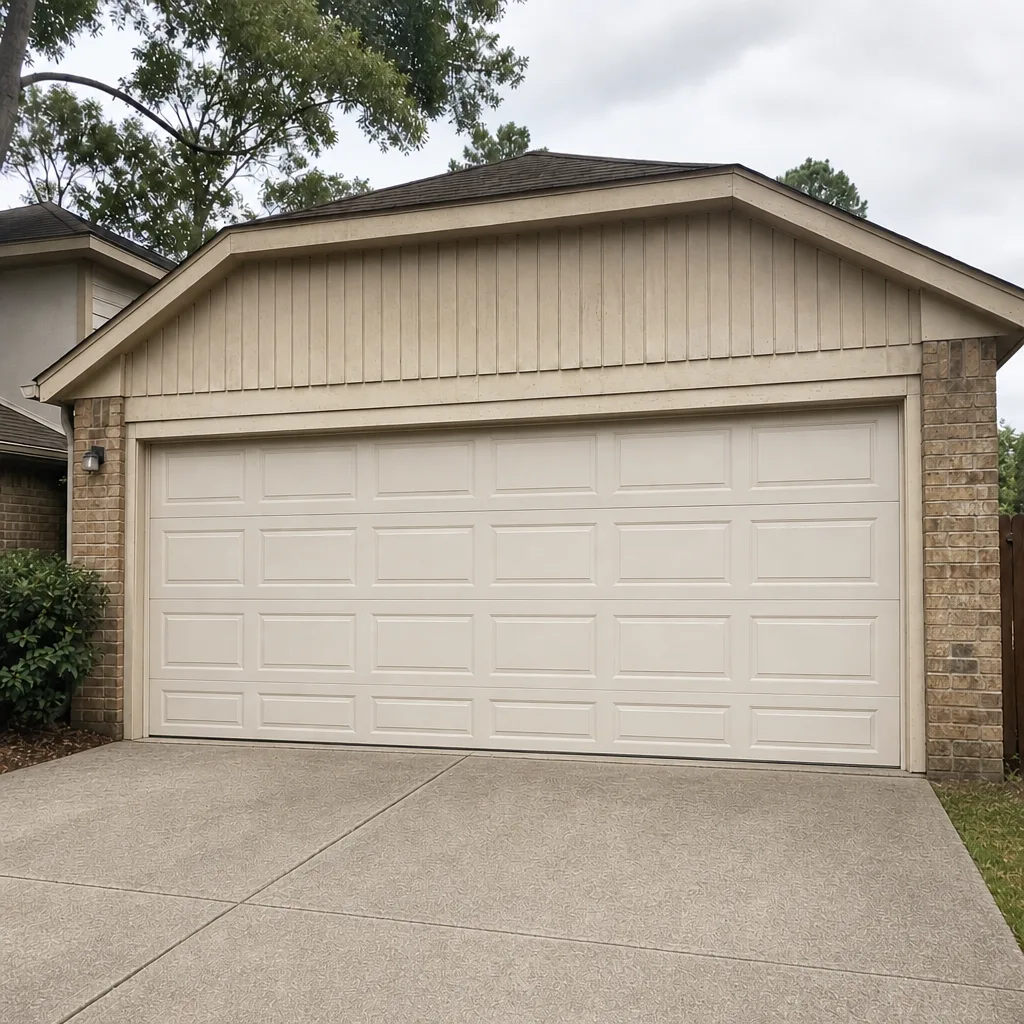 After
When to Call a Professional
Some jobs are best left to a technician, and it helps to know exactly when to make the call. Reach out when you see any of the following:
- A loud bang from the door, or the door suddenly won’t lift more than a few inches (a spring or cable problem)
- A door that’s off its track, a panel that’s bent or binding, or a door that runs unevenly
- Any sign of rust or damage on the torsion springs, cables, or bottom bracket
- A safety reverse that won’t trigger, or photo-eyes that won’t stay aligned
- The opener flashing a trouble code, running but not moving the door, or working intermittently
The Woodlands Garage Door Repair Pros offers free estimates in The Woodlands; call (866) 748-8990. A trained technician can diagnose the problem and quote the fix before any work begins. For the full range of what we handle, take a look at our The Woodlands Garage Door Repair Pros service overview, and if you’re weighing a replacement over a repair, our guide to garage door installation walks through what’s involved.
Frequently Asked Questions
Every four to six months is a good interval in The Woodlands, and twice a year at minimum. The high humidity and long hot summers break down lubricant faster here than in drier climates, so a door that stays quiet in a moderate climate may want a re-lube sooner. Use a silicone-based or garage-door-specific lubricant on the rollers, hinges, and springs, and wipe off any excess.
You can apply a light silicone-based lubricant to the outside of the spring coils without risk, and that’s a reasonable maintenance step. But don’t adjust, remove, or try to repair the spring yourself. Torsion springs are under heavy load and can cause serious injury. Any spring that’s broken, damaged, or making the door fail is a job for a trained technician.
Squeaking usually points to dry rollers, hinges, or a track that needs cleaning and lubrication, and the humidity here makes those dry points show up faster. If the squeak comes back within a few weeks of a re-lube, the underlying cause is probably worn rollers or a hinge that needs replacing, not a lubrication gap. Squealing that starts suddenly along with a broken door can also point to a spring problem; check that first.
Inspect the door panels for dents or bends, check the tracks for debris, test the safety reverse, clean and align the photo-eye lenses, and run the door through a full open and close cycle while listening for new noises. If you see damage or the door feels off, stop using the automatic opener until it can be evaluated by a technician.
Not necessarily easier, but the maintenance routine is the same across brands like Raynor, LiftMaster, Chamberlain, or Genie. What matters is using the right lubricants and checking the parts specific to your door. If your opener flashes a trouble code, that code is brand-specific; a technician familiar with the brand can read the code and match it to the fix.
Maintenance covers lubrication, cleaning, and tightening. Repair is needed if the door is out of balance, making new or loud noises on every cycle, off its track, slow to respond, or if a spring or cable is damaged. If you’ve re-lubricated and tightened the door and it’s still misbehaving, it’s time to call a technician for a diagnosis. Call (866) 748-8990 for a free estimate.
The Bottom Line
The garage door checklist that works in The Woodlands is not the one printed in the manual. It’s a schedule tuned to a humid subtropical climate: full service passes twice a year, a five-minute walk-around once a month, a re-lube every four to six months, and a quick inspection after every severe thunderstorm. Use silicone-based lubricant instead of WD-40, keep the tracks clean, watch for corrosion on the hinges, springs, and bottom bracket, and know that the torsion springs, cables, and bottom brackets are always a technician’s job. The payoff is the same fix that holds rather than the patch job that fails again in three months. From the spring to the opener to the panel, our team handles the whole system and matches parts to the brand you already have.
If you’d rather hand off this year’s maintenance pass to a specialist, call The Woodlands Garage Door Repair Pros at (866) 748-8990 for a free estimate. We diagnose the issue, quote the fix up front, and get the door back to quiet, smooth operation.
Written by the team at The Woodlands Garage Door Repair Pros.